


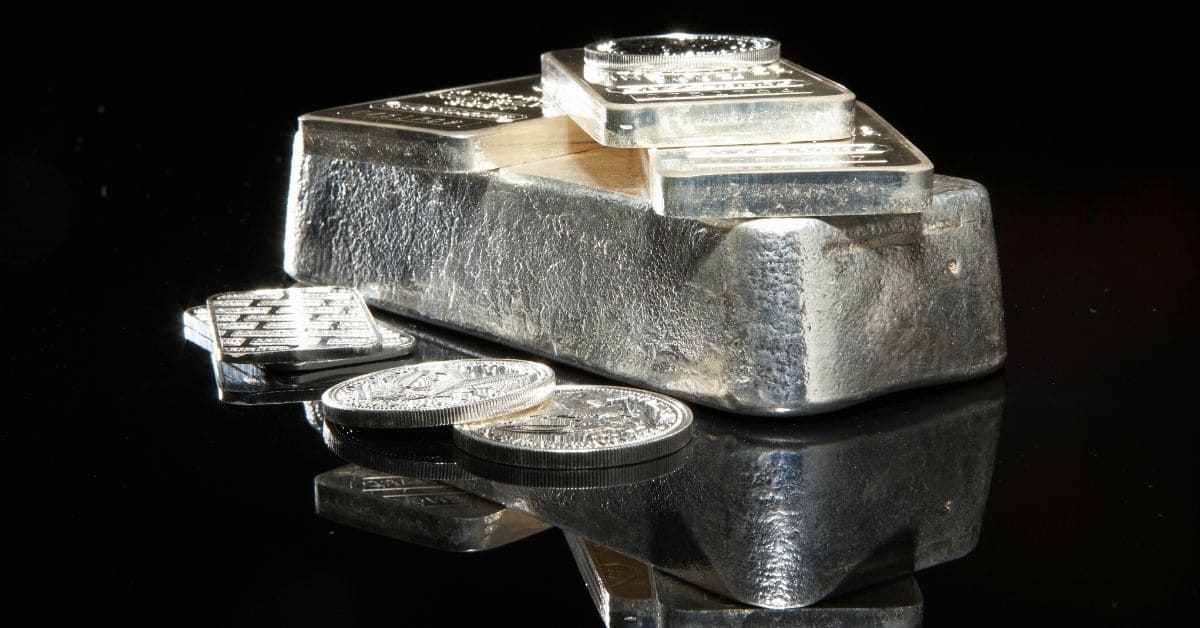
The silver coins vs bars debate boils down to your budget and selling timeline. Bars win for bulk purchases over $10,000, offering premiums of just 3-10% versus 15-30% on coins. Silver coins win for flexibility and easier resale, especially for investments under $5,000. Most successful silver investors hold both formats strategically: roughly 60% in bars for value efficiency and 40% in coins for liquidity when they need to sell portions quickly.
Your investment amount, storage situation, and whether you’ll need quick access to cash determine which format works best. A $15,000 investment operates differently from a $2,000 one. Long-term stackers have different needs than those building emergency reserves. This guide breaks down exactly when each option makes sense, what you’ll actually pay, and how to avoid the mistakes that cost new silver investors money.
When Silver Bars Win vs When Coins Win
Silver bars deliver maximum metal for your dollar. A 100-ounce bar at current prices carries roughly $150-300 in premiums over spot. One hundred 1-ounce American Silver Eagles cost $1,500-3,000 in premiums. That $1,200-2,700 difference represents real silver you’re not getting when you choose coins.
Silver coins win on practical flexibility. You can sell five coins from a twenty-coin stack and keep the rest. You can’t sell 25% of a 100-ounce bar without melting it down and recasting it, which destroys value and adds costs. Coins also sell within 24-48 hours through any dealer. Large silver bars can take weeks to move and require verification that smaller items don’t.
Tax treatment stays identical for both formats in the U.S. Both face 28% capital gains tax rates as collectibles. But reporting thresholds differ. Dealers must report bar sales of 1,000 ounces or more. Silver Eagles have no reporting requirement regardless of quantity.
Budget over $10,000 favors bars for the core holding. Smaller budgets and anyone needing tactical selling flexibility should focus on coins. The sweet spot often involves both: 60% in bars for cost efficiency, 40% in coins for liquidity.
When to Choose Silver Bars
Despite coins’ advantages in most categories, silver bars make sense in specific situations:
Large Single Purchases Over $15,000
Investing $15,000 or more in one transaction favors silver bars. A single purchase of fifteen 10-ounce bars saves roughly $1,200-1,800 in premiums versus buying 150 1-ounce coins. The premium savings become substantial enough to justify the liquidity tradeoff.
Pure Wealth Accumulation
Investors focused solely on accumulating ounces benefit from silver bars. You’re not trading actively. You’re not worried about selling portions. You want maximum silver content for your capital, stored securely, checked occasionally. This strategy works best when you can commit to holding for 5+ years minimum.
Professional Vault Storage
Professional vault storage makes silver bars more practical. Storage fees typically run 0.5-1% of value annually, regardless of format. A concentrated position in larger silver bars costs the same to store as scattered coin holdings but delivers better premium efficiency. Bars also stack more efficiently in vaults.
When Premium Savings Exceed $1,000
Run the math on your specific purchase. If choosing silver bars over coins saves more than $1,000 in premiums, and you don’t need tactical selling flexibility, bars make financial sense. A $20,000 investment might cost $600-1,200 in premiums for bars versus $3,000-4,000 for coins. That $2,000-3,000 difference buys 60-90 additional ounces of silver.
When to Choose Silver Coins
Coins win in most investor situations, particularly these:
First-Time Silver Buyers
Starting your silver investment with coins makes sense for multiple reasons. The lower dollar commitment per item (around $35-40 for a 1-ounce coin versus $350-400 for a 10-ounce bar) lets you test the market. You learn how to authenticate silver, work with dealers, and understand premiums without committing huge capital upfront.
Begin with 20-50 ounces of government-minted coins. American Silver Eagles offer maximum recognition in North America. Canadian Maple Leafs provide slightly lower premiums with higher purity. Both sell easily anywhere.
Dollar-Cost Averaging Strategies
Monthly silver purchases favor coins exclusively. Buying $200-500 of silver each month works perfectly with 1-ounce coins. You can’t buy fractional bars easily, and even if you could, their premiums would be terrible.
This approach smooths out price volatility over time. You buy more ounces when prices dip, fewer when prices spike. Over 3-5 years, this typically beats trying to time lump-sum purchases. Coins make this strategy practical and affordable.
Portfolio Rebalancing Flexibility
Tactical investors who actively manage positions need coins. Your target might be 15% silver today, but you want to reduce it to 10% if silver prices spike or increase to 20% if the dollar weakens. Coins let you execute these adjustments smoothly without selling entire positions.
Emergency Liquidity Reserves
Silver held as part of emergency reserves should be in coin form. Emergency funds need immediate availability. Coins sell within 24-48 hours at most dealers. Bars require verification and can take weeks, defeating the purpose of having liquid reserves.
Smaller Storage Spaces
Home storage under 500 ounces works better with coins for distributed risk. Keep some tubes in a bedroom safe, some in a basement location, some in a bank box. This prevents total loss from a single theft or disaster. One 100-ounce bar stolen means losing $3,000+ in a single piece.
Silver Coins vs Bars: Comparison
| Feature | Silver Coins | Silver Bars |
| Typical Premiums | 15-30% over spot | 3-10% over spot |
| Best For | Flexibility, beginners, budgets under $10k | Bulk purchases, cost efficiency, over $10k |
| Minimum Investment | $35-40 per coin | $350+ for 10oz bar |
| Liquidity Speed | 24-48 hours | 5-10 business days |
| Storage Space | Moderate (tubes required) | Excellent (compact) |
| Divisibility | Excellent (sell any amount) | Poor (all or nothing) |
| Dealer Recognition | Universal | Varies by refiner |
| IRS Reporting | None for Eagles | Required at 1,000+ oz |
| U.S. Tax Treatment | 28% capital gains | 28% capital gains |
| IRA Eligible | Yes (999+ fineness) | Yes (999+ fineness) |
| Collectible Potential | Some coins appreciate | None |
| Resale Spread | 2-4% below spot | 3-6% below spot |
Premium Comparison: What You’ll Actually Pay
Considering premiums helps you maximize silver content for your investment dollars. Premium is the amount above spot price that you pay for manufacturing, distribution, and dealer margins. Lower premiums mean more silver per dollar invested.
Typical Premium Ranges by Product Type
| Product Type | Premium Range | Example Cost (1 oz @ $30 silver) |
| 1000 oz bars | 2-3% | $30.60-30.90 per oz |
| 100 oz bars | 3-5% | $30.90-31.50 per oz |
| 10 oz bars | 5-8% | $31.50-32.40 per oz |
| 1 oz bars | 8-12% | $32.40-33.60 per oz |
| Generic rounds | 10-15% | $33.00-34.50 per oz |
| Government coins | 15-30% | $34.50-39.00 per oz |
These premiums assume normal market conditions. During supply shortages or demand spikes, premiums can double or triple temporarily. The COVID-19 pandemic saw some government coins trading at 50-60% over spot when mints shut down, and demand surged.
How Premiums Affect Investment Returns
Premium differences compound significantly over time and across large positions. Consider a $10,000 investment:
Scenario A: 10oz Silver Bars at 6% Premium
- Premium paid: $600
- Silver content: $9,400 worth
- Ounces purchased: 313.3 oz
Scenario B: 1oz Silver Coins at 20% Premium
- Premium paid: $2,000
- Silver content: $8,000 worth
- Ounces purchased: 266.7 oz
Scenario A gets you 46.6 more ounces of silver. If silver appreciates 50% over your holding period, that extra 46.6 ounces generates $699 in additional gains. If silver doubles, the extra ounces produce $1,398 more profit.
Among Silver Coins and Bars, Which Is the Better Investment?
For most individual silver investors, silver coins represent the better choice. Here’s why:
Coins win in six of seven categories:
- Liquidity and selling speed
- Storage flexibility and distributed risk
- Divisibility for precise position management
- Universal dealer recognition
- Easier for beginners and small budgets
- Better for dollar-cost averaging
Bars win in one category:
- Premium efficiency and cost per ounce
For most investors, the practical advantages of coins outweigh bars’ lower premiums. The ability to sell quickly, adjust positions precisely, and store flexibly matters more than saving 10-15% on premiums, especially for positions under $25,000.
Quick Recommendations From Our Experts
Under $5,000: 100% coins
$5,000-$10,000: 70% coins, 30% small bars
$10,000-$50,000: 60% bars, 40% coins
Over $50,000: 70% bars, 30% coins
Start with what you can afford today in coins. As your position grows past $10,000, begin adding bars to improve premium efficiency while maintaining coin liquidity for tactical needs.
FAQs on Silver Coins vs Bar Investments
Are silver coins really worth more than bars per ounce?
You pay more upfront for silver coins due to higher premiums (15-30% vs 3-10% for bars). But coins often retain those premiums when selling because demand stays strong. Bars trade closer to melt value in both directions. Whether coins are “worth more” depends on whether you value liquidity and flexibility over pure metal content.
Which is easier to sell: coins or bars?
Coins win decisively. Government-minted coins sell within 24-48 hours through any dealer. Small bars (1-10 ounces) sell reasonably well but take 5-7 days. Large bars (100+ ounces) can take weeks to move and require verification that delays settlement. During market stress, this difference becomes even more pronounced.
Do silver bars hold their value as well as coins?
Both formats track silver spot prices closely. Bars follow spot more tightly because their premiums are lower and less volatile. Coins can see premium fluctuations that create short-term value changes beyond spot movement. Long-term (5+ years), both hold value equally well, assuming you buy at reasonable premiums.
Can I put silver in my IRA?
Yes, both IRS-approved coins (999+ fineness) and bars from accredited refiners qualify for self-directed precious metals IRAs. You’ll need a custodian who allows physical precious metals and an approved depository for storage. Setup costs run $100-300, with annual fees of $100-400 depending on account size.
Should beginners buy silver coins or bars?
Beginners should start with coins exclusively. The lower per-item cost ($35-40 vs $350+ for bars) reduces risk while learning. Coins also sell faster if you need to exit quickly. Once you’re comfortable with silver investing and ready to make larger purchases, add bars to capture premium savings.
How do I verify silver authenticity?
For coins: check weight (precise scales), dimensions (calipers), ping test (should ring clearly), and magnet test (silver isn’t magnetic). For bars: verify serial numbers with refiners, check assay certificates, perform specific gravity tests, or use XRF analyzers. When in doubt, pay a dealer $20-50 to test with professional equipment.
Sum Up
Silver coins and bars each serve distinct purposes in a precious metals portfolio. Coins provide flexibility, recognition, and easier resale. Bars deliver maximum metal content per dollar invested.
The best approach combines both formats strategically. Use coins for your initial purchases and tactical positions. Add bars once your holdings exceed $10,000 to capture premium savings on your core accumulation. Most successful silver investors settle on roughly 60% bars for cost efficiency and 40% coins for liquidity.
Start with what you can afford today. Buy authentic products from reputable dealers. Store securely. Build your position gradually over time. These fundamentals matter more than obsessing over the perfect coins-to-bars ratio.
Our monthly subscription service delivers a curated mix of investment-grade silver coins and bars directly to your door. We handle the selection, authentication, and secure delivery while you build wealth one delivery at a time through consistent monthly accumulation.